

Start with proper running shoes, not casual sneakers, and leave a thumb’s width in the toe box for natural foot expansion. Begin training three to four days per week using the walk-run method: alternate two minutes of running with one minute of walking, gradually increasing running time by 10% weekly.
Replace your shoes every 300 to 500 miles to maintain cushioning. Watch for sharp pain, persistent swelling, or unusual fatigue as warning signs of overtraining.
The right approach turns this challenging changeover into a sustainable practice.
How to Choose Running Shoes That Won’t Hurt Your Feet

The foundation of any successful running journey starts with proper footwear.
Investing in the right running shoes from day one sets you up for miles of injury-free performance and lasting comfort.
You’ll want shoes specifically designed for running, not casual sneakers.
During shoe fitting, leave about a thumb’s width in the toe box so your feet can expand naturally.
Understanding pronation types matters; whether you’re neutral, overpronating, or underpronating affects which shoes work best.
Choose moisture-wicking, breathable materials to prevent blisters and keep your feet comfortable.
Plan to replace your shoes every 300 to 500 miles.
Worn-out cushioning leads to discomfort and injuries, limiting your freedom to run when you want.
Ensure your winter running footwear is suitable for winter conditions to avoid slips on icy or snow-covered surfaces.
The Walk-Run Method: Your Beginner Training Schedule
Now that your feet are properly supported, you’re ready to build your running capacity without overwhelming your body. The walk-run method breaks your workout into manageable chunks.
Start with two minutes of running followed by one minute of walking. These run walk intervals let you recover while building endurance progression.
Stick to three or four sessions weekly, increasing your running time by just 10% each week.
Over several weeks, you’ll gradually extend the running portions while shortening the walking breaks. This measured approach keeps you comfortable, prevents injuries, and transforms you into a continuous runner. To stay motivated throughout your training, consider incorporating entertainment options like music or podcasts during your workouts to combat monotony and keep your mind engaged.
How Many Days Per Week Should New Runners Train?
How often should you lace up those new shoes each week? Start with three to four training days. This training frequency builds endurance without overwhelming your body.
Rest days matter just as much as running days; recovery importance can’t be overstated. Your muscles need time to adapt and strengthen between sessions.
Rest days aren’t optional—they’re when your body actually gets stronger, turning all that hard work into real progress.
Programs like Couch to 5K follow this three-day model for good reason. Begin with run-walk intervals, spacing workouts across the week.
Add cross-training or complete rest on alternate days. Feeling unusually tired or sore? Scale back.
Running every single day invites burnout and injury. Listen to your body’s signals.
What Your First Running Week Actually Looks Like
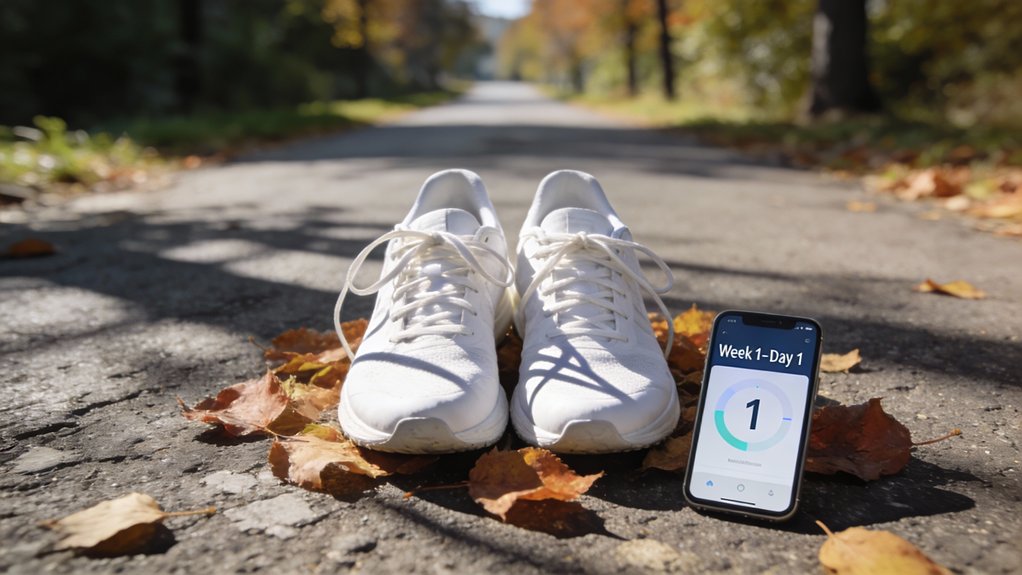
Your first week won’t look like a marathon training plan: it’ll look simple, manageable, and maybe even easy.
You’ll run for two minutes, walk for one, and repeat that pattern three to four times throughout the week.
Rest days matter: your body needs them to adapt.
Start a running log to track your distance and time. Drink water before, during, and after each session.
When you finish that first week, you’ve accomplished something real.
You’ve broken free from the couch and proven you can do this. That’s worth celebrating.
Running Injury Warning Signs Every Beginner Should Know
Starting a running routine means accepting a simple truth: your body will talk to you, and you need to listen.
Injury prevention starts with recognizing warning signs early.
Sharp pain in your knees, shins, or feet that worsens mid-run can signal stress fractures. Persistent joint or muscle pain indicates overuse, take a break.
Swelling around joints after running needs attention, possibly medical evaluation. Numbness or tingling in your legs suggests nerve compression or circulation problems.
Consistent fatigue or declining performance means you’re overdoing it. Pain management isn’t about pushing through, it’s about staying free to run another day.
When Walking During Runs Is Actually a Good Thing
Walking during your runs isn’t cheating, it’s strategic training that even experienced runners use. The run-walk method builds endurance through planned intervals, letting your body recover between efforts.
The run-walk method isn’t cheating—it’s a proven endurance-building strategy that experienced runners rely on for sustainable training progress.
You’ll sustain longer distances without crushing fatigue. Walking benefits include reduced injury risk and lower perceived exertion, even as your performance improves. These recovery strategies give you time to check your form and breathing patterns.
Start with one-minute running intervals followed by 30-second walks. As you progress, you’ll naturally extend the running portions.
This approach builds confidence while your body adapts at a sustainable pace.
How to Make Running a Daily Habit Without Forcing It

Building a running habit works best when you stop treating it like an obligation and start treating it like an appointment with yourself.
Pick specific days and times each week, like Tuesday and Thursday at 7 AM, to create a routine that flows naturally.
Start with ten-minute run-walk sessions, celebrating each completed week to build mental motivation without pressure.
Track your progress in an app or journal so you’ll see real improvements over time.
Join a Parkrun or local running group for social support and accountability.
When running becomes part of your schedule rather than a chore, you’ll keep showing up.
Should You Sign Up for a 5K or Run Without a Race Goal?
Why do some new runners thrive with a race on the calendar while others feel suffocated by it? The answer hinges on how you’re wired.
Race benefits include structured training plans, built-in accountability, and a clear finish line to work toward. Programs like Couch to 5K provide frameworks that make progress measurable over eight to twelve weeks.
But if deadlines stress you out, running without external pressure lets you explore personal goals at your own pace. You’ll improve gradually, enjoy each mile, and skip the anxiety of performance day.
Choose the path that feels liberating, not restrictive.