

You don’t need an elaborate meal plan to run well, just a few smart choices about timing and food type. What you eat before a run directly affects your energy levels, stomach comfort, and overall performance.
A banana thirty minutes before a short jog works differently than oatmeal two hours before a half-marathon. The gap between getting it right and feeling sluggish or crampy comes down to understanding which foods work for your distance, intensity, and personal digestive system.
Should You Eat Before Running?
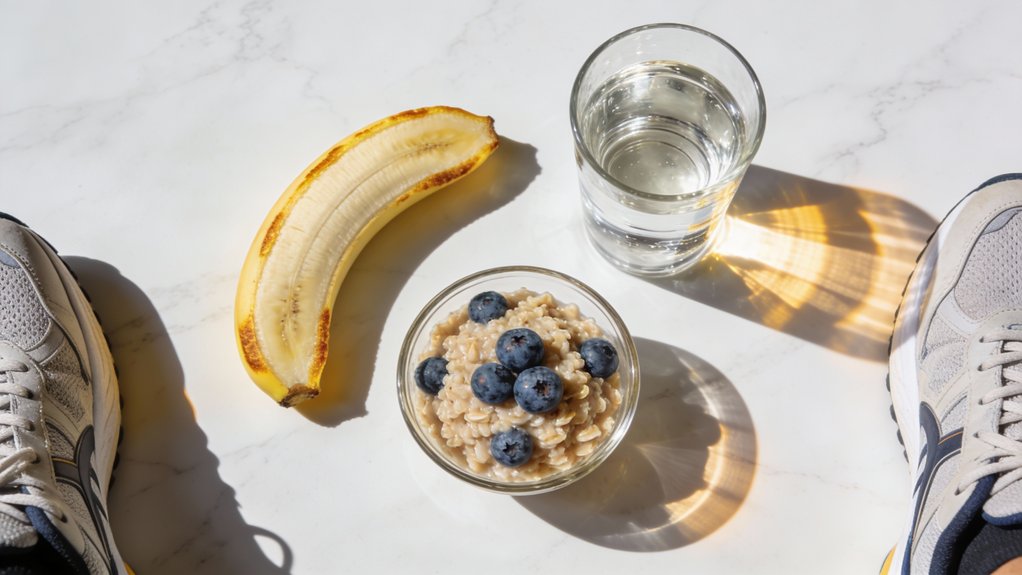
Whether you should eat before running depends mainly on how long and how hard you plan to run.
Short, easy-paced runs under 45 minutes don’t require pre run snacks if you’ve eaten within the past few hours. Your body’s existing energy sources will handle the work.
However, longer runs or tough workouts demand fuel. Aim for 30-60 grams of easily digestible carbs 30-60 minutes beforehand.
Running on empty might work for brief jogs, but it’ll tank your performance on extended efforts.
Test different approaches to discover what your body prefers.
What to Eat Before Running: Best Pre-Run Meals
When planning your pre-run meal, timing matters as much as what’s on your plate. You’ll want to eat 2 to 4 hours before hitting the road.
Oatmeal, pasta, and rice deliver the sustained carbs you need. A turkey and cheese sandwich on whole grain bread combines protein with energy-boosting carbs.
Pre run smoothies work well for those who can’t handle solid food early. Energy bars offer portable convenience when you’re short on time.
Blend up a smoothie or pack an energy bar when you need quick, easy-to-digest fuel before your run.
Grab a banana 30 to 60 minutes out for quick fuel.
Skip high-fat, spicy, and high-fiber options: they’ll slow you down.
Quick Pre-Run Snacks for 30-Minute Fuel
If you’re pressed for time, you’ll need a snack that hits fast and doesn’t sit heavy in your stomach. A banana benefits your run by delivering 15-30 grams of easily digestible carbs within 30 minutes.
Toast with honey works just as well. Energy gels offer another solid option: they’re portable and absorb quickly when you’re already lacing up.
A small yogurt with fruit gives you carbs plus some protein for sustained output.
Eat 30-60 minutes before heading out. This timing lets your body convert food into usable fuel without causing cramping or sluggishness mid-stride.
Foods to Avoid Before Running

Your pre-run meal matters just as much for what you skip as what you eat. Common mistakes include high-fat foods that sit heavy in your stomach, slowing digestion when you need quick energy.
Spicy dishes often trigger gastrointestinal distress mid-stride. High-fiber beans and cruciferous vegetables cause bloating and cramping; learn from others’ personal experiences here.
Excessive dairy leads to digestive issues for many runners.
Most importantly, race day isn’t the time for culinary experiments.
Save your food adventures for after the finish line—race day demands familiar, proven fuel your gut already trusts.
Stick with tested foods that’ve worked before. Your body deserves predictable fuel, not digestive surprises when performance counts.
When to Eat Before Running: Timing Your Meals
Knowing what not to eat is only half the equation, the clock matters almost as much as the menu.
Give yourself 3 to 4 hours for full meal digestion before longer runs. Your body needs time to convert that fuel into stable energy levels.
For quick sessions under 60 minutes, grab 30 grams of carbs 30 to 60 minutes beforehand.
Planning a distance effort? Eat complex carbs and protein 1 to 3 hours prior.
Everyone’s different, so test timing during training runs. What works for your training partner might leave you sluggish or cramping.
Find your rhythm.
How Much Water to Drink Before Running?
How much water should you drink before lacing up? Start with 16-20 ounces two to three hours before your run. This gives your body time to absorb fluids and eliminate excess.
Add another 8-10 ounces 20-30 minutes before you head out to top off your tank. If you’re running early morning, take a few sips upon waking to counter overnight dehydration.
Smart hydration strategies mean adjusting for heat, humidity, and how much you sweat.
Water temperature matters too: cool water absorbs faster than ice-cold.
Maintain consistent daily hydration at around 64 ounces for peak performance.
What to Eat for Short Runs vs. Long Distances
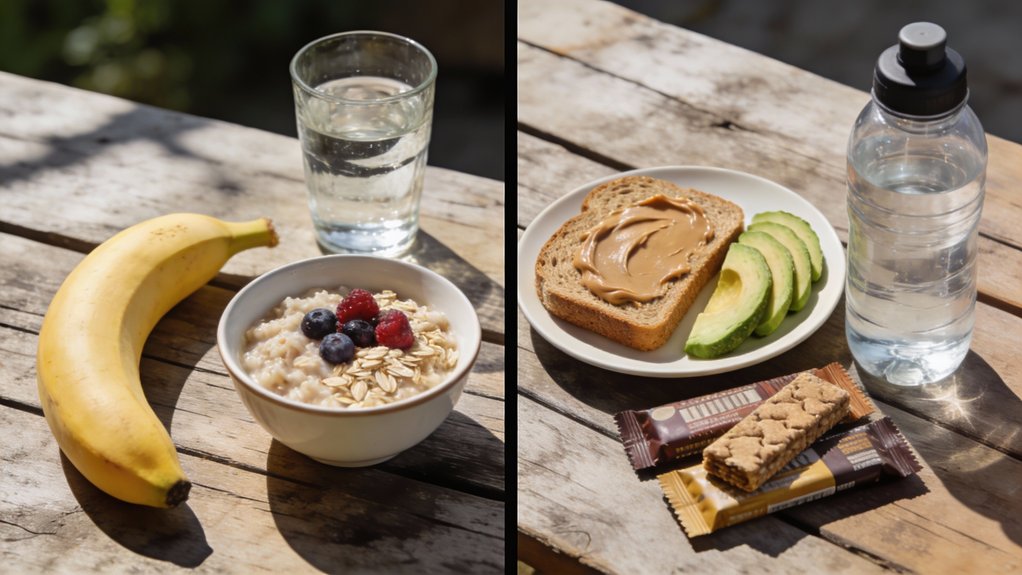
Fueling your body properly depends on how far you plan to run. For short runs under 60 minutes, grab simple short run snacks like a banana or toast with honey 30 to 60 minutes beforehand: around 30 grams of carbs does the trick.
Runs between 60 to 90 minutes need more substance: oatmeal with fruit or a peanut butter sandwich 1 to 2 hours prior works well.
Long distance meals require strategic planning. Carb-load for several days before marathons while cutting back on protein and fats.
Eat your final meal 2 to 4 hours before starting.
During runs exceeding 90 minutes, consume 30 to 60 grams of carbs hourly through gels or sports drinks.
How to Find Your Perfect Pre-Run Routine?
While pre-run nutrition guidelines provide a solid foundation, your body’s unique needs require personal experimentation. Start by testing different carbohydrate sources: bananas, oatmeal, toast, 30 to 60 minutes before shorter runs.
Every runner’s pre-run fuel needs differ—experiment with bananas, oatmeal, or toast to find what works for you.
Keep a food journal documenting what you ate, when, and how your body responded. This tracking reveals patterns you can’t spot otherwise.
For nutrient timing with longer distances, experiment between 1 to 4 hours before running. Don’t forget hydration; drink water or electrolyte beverages based on conditions and duration.
Through consistent pre run experimentation, you’ll discover the routine that fuels your runs without weighing you down.