

Your first running shoes should match your foot’s natural motion: visit a running store for gait analysis to determine if you need neutral shoes (for medium to high arches) or stability shoes (for flat feet and overpronation).
Look for at least 30mm of heel cushioning and an 8mm drop if you’re a heel striker, with half an inch of toe space to prevent blisters.
Budget $75-$140 for solid options that’ll last 300-500 miles, prioritizing proper fit over flashy features. The sections below break down each consideration in greater detail.
Do You Need Neutral or Stability Running Shoes?
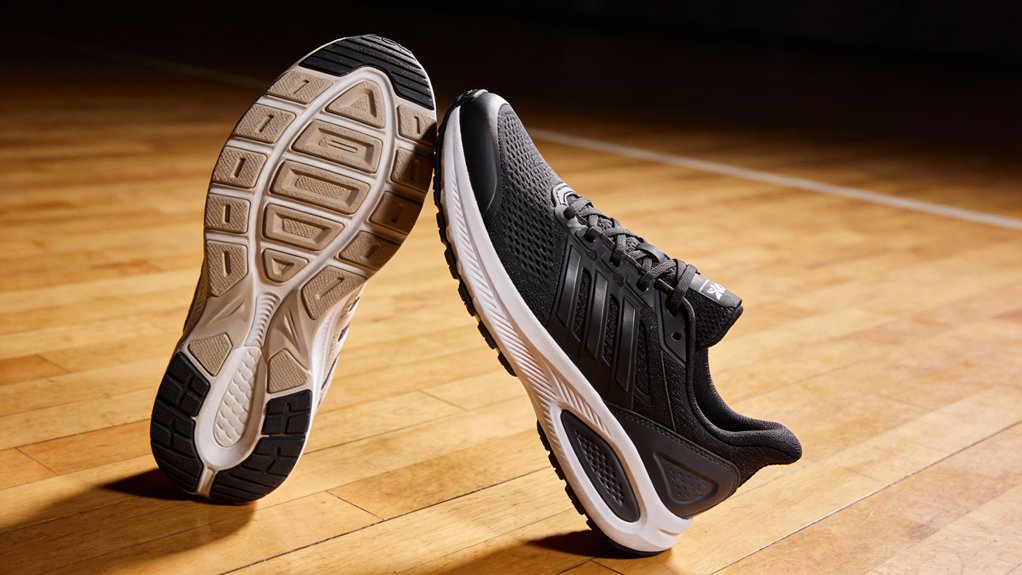
How do you know which running shoe category fits your feet? Start with a simple gait analysis at a running store.
A gait analysis at your local running store reveals your pronation pattern and unlocks the right shoe category for your feet.
They’ll watch you run and check your pronation pattern.
If you’ve got medium to high arches and your feet roll naturally inward, you’ll want neutral shoes.
They’re flexible and comfortable without extra support features.
But if you overpronate or have flat feet, stability shoes are your answer.
They’ve got dual-density midsoles that prevent excessive inward rolling.
This support reduces knee and shin pain while protecting you from plantar fasciitis and IT band issues.
Properly fitted winter running shoes should also be suitable for winter conditions to avoid slips when running in colder months.
Your biomechanics determine your freedom to run.
What Does Pronation Mean for Beginner Runners?
You’ll hear the term “pronation” constantly when shopping for running shoes, but it’s really just describing how your foot naturally rolls inward when it hits the ground.
Understanding pronation types matters because they directly affect which shoes you’ll need.
Neutral pronation means your foot rolls inward about 15%, absorbing shock efficiently.
Overpronation means excessive inward rolling, causing wear on your shoe’s inner edge.
Supination means your foot rolls outward, wearing down the outer edge.
These pronation effects determine whether you’ll run comfortably or risk injury, making it worth checking your current shoes’ wear patterns before buying new ones. Proper running shoes that match your pronation type can help you maintain proper form throughout your workouts and prevent discomfort during training.
What Cushioning Level and Drop Work Best for New Runners?
Walking into a running store, you’ll face dozens of shoes claiming different cushioning levels and “drops,” two specifications that genuinely matter for your comfort and injury prevention.
For cushioning preferences, you’ll want at least 30mm of heel padding to absorb impact forces effectively.
Drop height refers to the heel-to-toe difference, and beginners benefit from 8mm minimum. This higher drop activates hip muscles properly and supports heel strikers especially well.
Softer midsoles feel comfortable but shouldn’t let you sink excessively.
Test various combinations yourself—your body knows what works best for your individual stride and running style.
How Should Beginner Running Shoes Fit Your Feet?
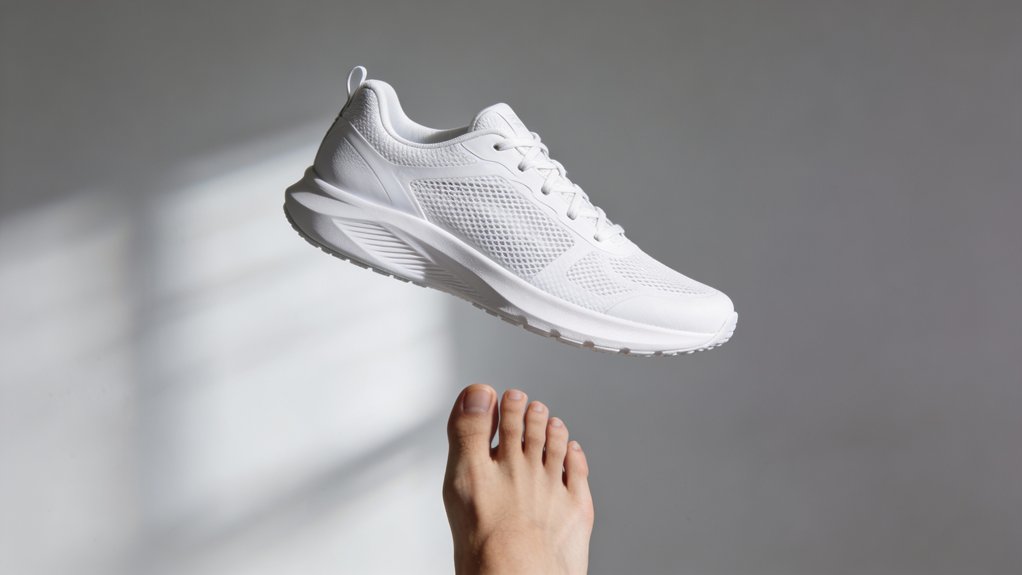
Getting the fit right matters more than brand names or flashy colors when you’re selecting your first pair of running shoes. You need about half an inch of toe space between your longest toe and the shoe’s front to prevent blisters.
The heel fit should feel snug without pinching, keeping your foot stable through each stride.
A properly fitted heel prevents slipping and maintains stability, securing your foot without causing discomfort during your run.
Shop in the evening when your feet have naturally swollen to their largest size.
Wear your running socks during fitting to assess comfort accurately. The shoe should feel secure without creating pressure points, allowing your foot to flex naturally.
Best Daily Training Shoes for Beginners Under $150
Quality doesn’t require emptying your wallet when you’re shopping for your first serious pair of running shoes. Major running shoe brands offer excellent options under $150 that’ll serve you well.
The Brooks Ghost 16 ($140) provides 35.1mm of heel cushioning, perfect if you’re a heel striker.
Shoe weight considerations matter for daily comfort: the Puma Velocity Nitro 4 weighs just 247g, while the Hoka Clifton 10 balances cushioning at 285g.
The Asics Novablast 5 ($140) accommodates various running styles with FF Blast Max foam.
Each delivers reliable performance without the premium price tag that’d limit your freedom to explore running.
Best Stability Running Shoes for Beginners Who Overpronate
Your foot shouldn’t roll inward excessively during landing, that’s overpronation, and it affects roughly 50% of runners.
You’ll need stability shoes with dual-density midsoles that prevent this inward roll.
The Brooks Adrenaline GTS 24 uses GuideRails technology to keep your stride aligned while delivering balanced cushioning.
GuideRails technology in the Brooks Adrenaline GTS 24 maintains proper stride alignment without sacrificing cushioning comfort.
Asics GT-2000 13 features a wide base with flared sidewalls for secure footing.
New Balance Fresh Foam X 860 V14 combines flexible support with an EVA stability plate.
For longer distances, the Saucony Hurricane 24 offers extra cushioning.
These shoe features match most runner preferences without restricting your natural movement.
How Much Should You Spend on Your First Running Shoes?
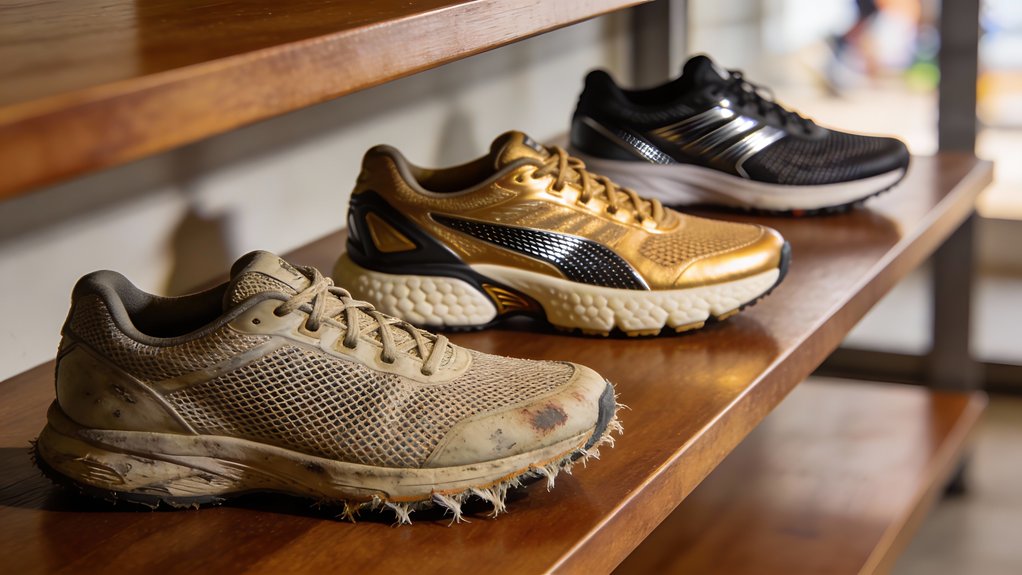
While premium running shoes can cost over $200, beginners should budget between $75 and $140 for their first pair. This range gives you access to proper cushioning and stability features that’ll protect your joints without draining your wallet.
Budget considerations matter, but don’t go rock-bottom: shoes under $75 typically lack the support you need to stay injury-free. You’ll find solid options around $100 that offer decent shoe longevity, lasting 300-500 miles of training.
Focus on fit and comfort over flashy tech. That mid-range sweet spot lets you invest wisely without commitment to expensive features you mightn’t need yet.