

Good running form starts with your head positioned over your shoulders, eyes focused about 20 meters ahead. Keep your shoulders relaxed and dropped, arms bent at 90 degrees, swinging naturally from hip to shoulder height.
Your foot should land beneath your hips, not out in front, to minimize braking forces and injury risk. This alignment reduces energy waste and can improve your performance by up to 10%.
The techniques below will help you refine each element of your stride.
Why Running Form Affects Your Speed and Injury Risk
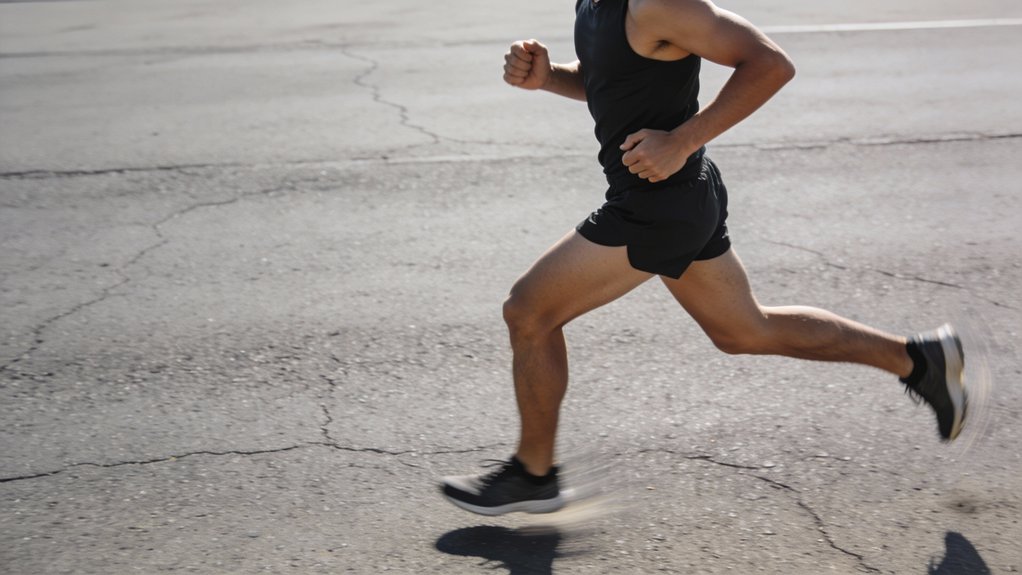
When you run with poor form, you’re fundamentally fighting against yourself with every step. Your body wastes energy correcting imbalances instead of propelling you forward.
Proper alignment distributes impact forces evenly across your joints, reducing injury risk from shin splints to knee pain. Landing your foot under your center of gravity creates less braking force with each stride.
Proper form channels impact through your body efficiently, minimizing joint stress while maximizing forward momentum with every footstrike.
This energy efficiency translates directly to speed: some runners improve performance by 10% after fixing their technique. Your stride frequency becomes more sustainable over distance.
Good biomechanics means you’ll run faster while staying healthier, giving you the freedom to train harder. Additionally, proper running form strengthens bones, connective tissues, and joints, which reduces your likelihood of injuries during both training and daily activities.
Where Should Your Head and Eyes Be While Running?
Your head position influences every aspect of your running form below it.
Think of head alignment as the foundation for everything else: when it’s off, your entire body compensates.
Here’s what proper positioning looks like:
- Align your ears directly over your shoulders, keeping your head level with your spine
- Set your gaze focus about 20 meters ahead on the path, not at your feet
- Keep your neck relaxed to prevent unnecessary tension from building up
- Let your shoulders, hips, and legs move together in natural harmony
This simple adjustment releases efficient mechanics and conserves energy throughout your run. Maintaining proper head alignment works in conjunction with extra stretching in colder months to prevent injuries and optimize your running performance.
How to Keep Your Shoulders and Arms Relaxed for Better Running Form
Tension creeps into your shoulders and arms more easily than any other part of your running form, draining energy with every stride.
You’ll notice shoulder tension building when your shoulders rise toward your ears or your fists clench tight.
Drop them down, keep your elbows bent at roughly 90 degrees, and let your arms swing naturally from the shoulders.
Your hands should stay loose, fingers slightly curled like you’re holding a potato chip without crushing it.
Check in with yourself every few minutes, ask “are my shoulders relaxed?” and you’ll maintain efficient arm swing throughout your entire run.
How to Position Your Elbows and Hands for Propulsion

Every movement of your arms either powers you forward or wastes precious energy. Smart elbow positioning and hand movement release the speed you’re capable of reaching.
- Bend your elbows at 90 degrees and keep them close to your body: this angle maximizes propulsion without burning extra fuel.
- Drive your elbows backward rather than focusing on the forward swing; this generates the momentum that propels you ahead.
- Let your hands swing from hip to shoulder height in sync with your legs for efficient coordination.
- Keep fingers lightly curled and relaxed, clenched fists create tension that radiates through your shoulders and slows you down.
How Do You Run Tall and Fix Rounded Posture?
While arm mechanics drive your forward motion, the foundation of efficient running starts with how you hold your body upright.
Look 20 meters ahead to align your head, neck, and spine naturally.
Relax your shoulders and engage your core, imagine a pulley lifting you upward. This counters the damage from sitting all day, which tightens hip flexors and creates that hunched-over look.
Imagine a string pulling you skyward—shoulders down, core tight—to undo hours of desk slouching and restore natural alignment.
Try this drill: stand tall, rise onto your toes, then fall forward gently. Feel that alignment? That’s proper posture alignment working for you.
Master this technique and you’ll gain better energy conservation while reducing injury risk through consistent practice.
Where Should Your Foot Land With Each Stride?
Where your foot meets the ground determines whether you’re running efficiently or fighting against yourself with every step. Your foot landing directly beneath your center of gravity, not out in front, unlocks stride efficiency and keeps you moving forward without wasted energy.
Here’s what proper foot landing looks like:
- Your foot strikes under your hips, not ahead of your body
- You land on your midfoot or forefoot to minimize braking forces
- Your joints absorb impact smoothly instead of jarring with each heel strike
- You maintain forward momentum without fighting unnecessary resistance
Elite runners consistently demonstrate this pattern because it works.
Which Foot Strike Is Best: Forefoot, Midfoot, or Heel?
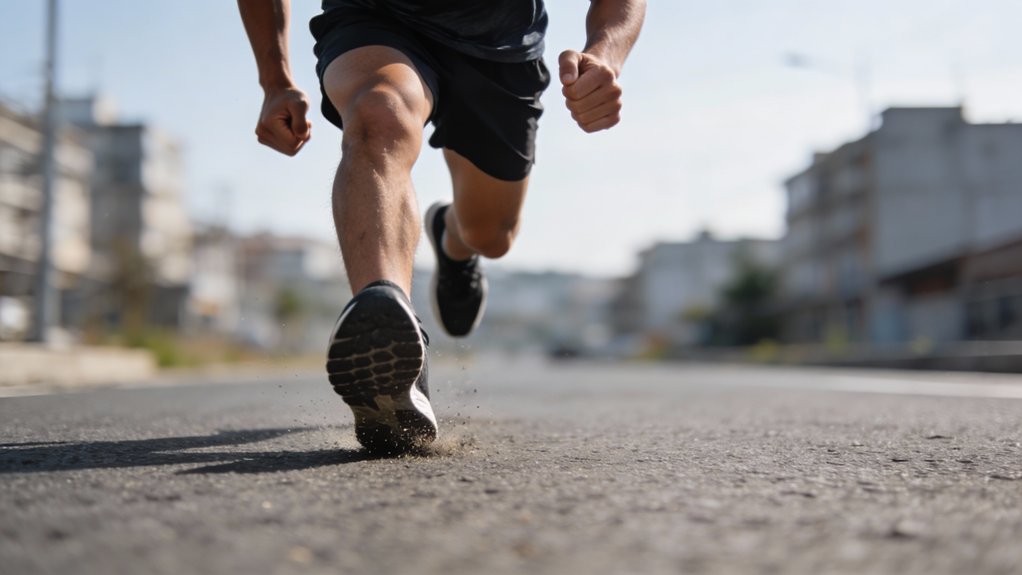
The debate over foot strikes has dominated running conversations for decades, yet the answer isn’t as simple as crowning one technique superior to all others.
Your best foot strike comparison depends on your body’s unique mechanics and running goals.
Forefoot striking reduces knee impact but stresses your calves more. Midfoot striking distributes forces evenly across your lower leg. Heel striking, though common, creates higher braking forces that may increase joint stress.
For injury prevention, focus less on strike type and more on landing with your foot beneath your center of gravity. That positioning maintains momentum regardless of which part touches down first.
How to Sync Your Breathing With Your Running Form
Most runners treat breathing as background noise, something that just happens while they focus on form and pace.
But syncing your breath with your stride releases serious performance gains.
You’ll deliver more oxygen to working muscles and maintain your pace longer without that desperate, gasping feeling.
Here are four breathing techniques to match your rhythm patterns:
- 3:2 pattern – Inhale for three steps, exhale for two steps during moderate runs
- 2:1 pattern – Inhale two steps, exhale one for faster paces
- Diaphragm focus – Breathe deep from your belly, not shallow chest breaths
- Nose and mouth – Use both for maximum airflow and oxygen intake
3 Simple Drills to Practice and Perfect Your Form
Four targeted drills will transform your running mechanics faster than logging endless miles with flawed technique.
Start with the Run Tall drill: stand upright, rise onto your toes, and fall forward gently. This reinforces posture improvement naturally.
The Arm Swing Drill keeps your elbows close while hands stay relaxed, proper mechanics for better propulsion.
Knee Lift marches engage hip flexors and glutes, building strength through high lifts.
Try Gravity Drills on slight inclines to harness forward motion.
Finally, practice Foot Strike Drills on soft surfaces, landing midfoot under your center of gravity.
These drill benefits compound quickly with consistent practice.