

The short answer is no.
A dedicated triathlon bike costs thousands of dollars and is built for saving seconds on the bike leg. For a first sprint, you are not chasing seconds. You are chasing a finish line.
What you need is a bike that fits, runs safely, and has enough gears to get you up a hill. That is a much lower bar than the sport’s image suggests, and most runners already own or can borrow something that clears it.
What actually works for a first sprint
The question most beginners ask is “what bike should I buy?” The better question is “what do I already have access to?”
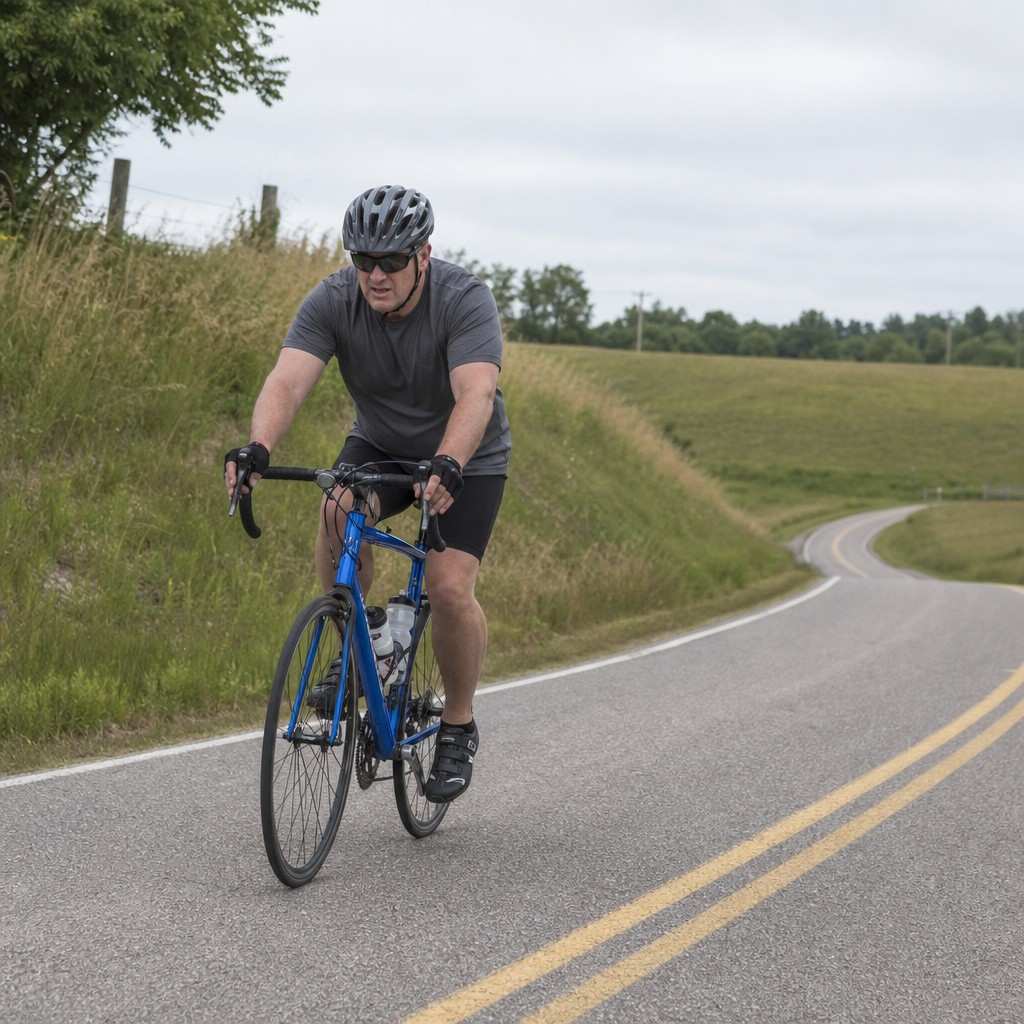
A road bike in decent shape is the most natural fit. It is light, efficient on pavement, and the riding position is fine for sprint distances. It does not have to be new or impressive.
An older road bike from a garage or a friend works just as well. Borrow before you buy. If the bike has not been ridden in a while, a tune-up at a local bike shop is the smartest twenty to forty dollars you will spend. New brake cables, fresh tires, and a gear adjustment make a tired old bike feel completely different.
You do not need expensive gear to start. Borrowed and entry-level kit finishes a first sprint perfectly well.
A tuned-up hybrid can also get you to the finish line. Hybrids are heavier and a little slower than road bikes, but a sprint bike leg is around 12 miles. The difference in time is a few minutes, not an hour.
What does not work: a heavy mountain bike with knobby tires, or anything with mechanical issues you have been ignoring.
The one thing you absolutely need to get right
A helmet that fits is non-negotiable.
Rules aside (triathlon races require a helmet and most will disqualify you for riding without one), a properly fitted helmet is the one piece of safety gear between your head and the road. It does not have to be expensive, but it must sit level on your head, fasten snugly under your chin, and not rock around.
If you are borrowing a bike and do not have a helmet, you can compare bike helmets on Amazon for options that will serve a beginner just fine.
This is the one thing worth buying new, before your first ride.
A quick safety check before you ride
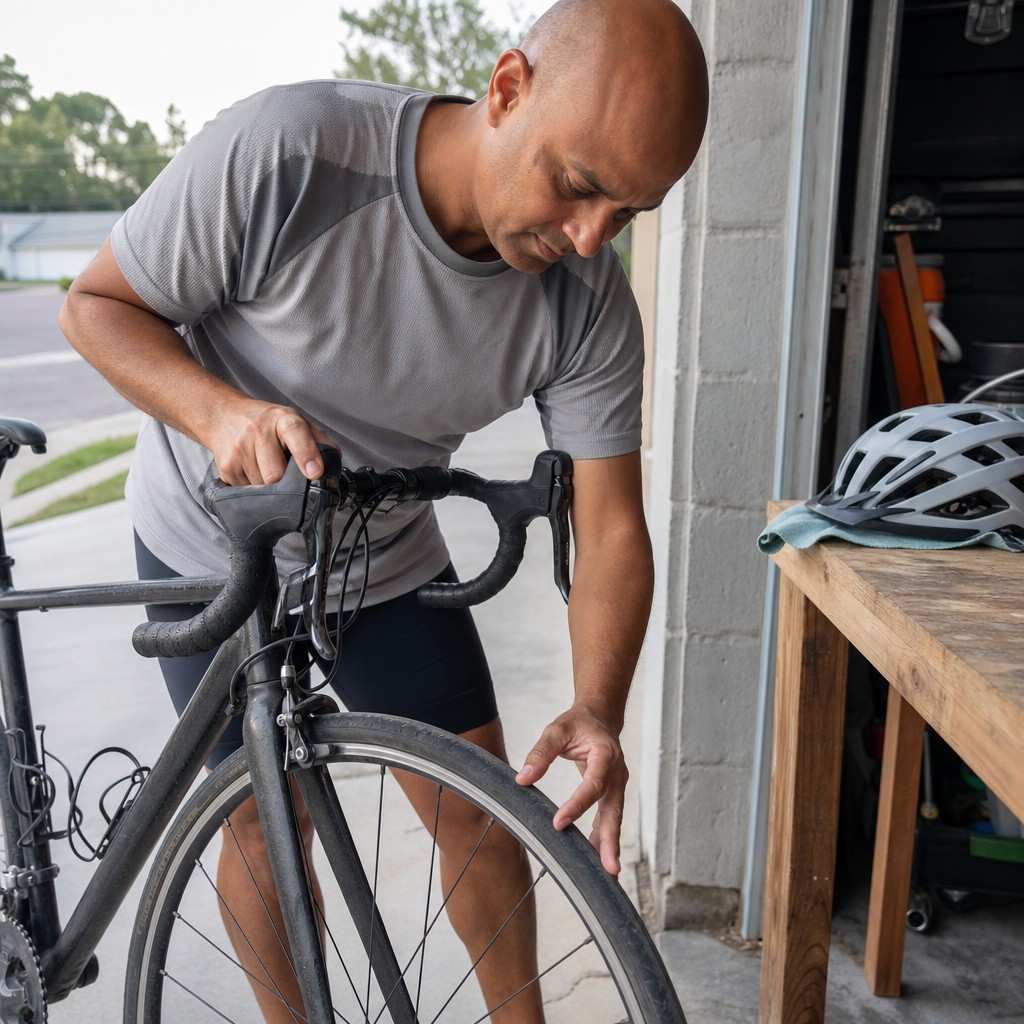
Whatever bike you are using, do these five things before you take it out:
- Squeeze both brakes. They should feel firm and stop the wheel completely. If they feel soft or barely grip, the bike needs attention.
- Squeeze the tires. A road or hybrid tire should feel hard, not squishy. Check the sidewall for the pressure range and use a pump with a gauge.
- Spin the wheels. They should spin freely without rubbing the brake pads.
- Check the chain. It should move smoothly through the gears. A dry, rusty chain needs lubrication.
- Test the gears. Shift through the whole range, both front and back. If anything skips or hesitates, a tune-up will sort it.
None of this requires a mechanic. But if you find something you cannot fix yourself, take it to a bike shop. A basic safety check is usually free or cheap, and riding a mechanically unsafe bike on race day is not worth any time saving.
Gears and hills: the thing new cyclists actually worry about
Most beginners worry about hills, not speed. That is the right thing to worry about, and the fix is simple.
Use your lowest gear early, before the hill gets steep. Shifting on a hill when you are already out of momentum is hard on the drivetrain and harder on your legs. Look ahead, shift down while you still have speed, and spin at a higher cadence (faster pedaling, easier gear) rather than grinding in a hard one.
Aim for around 80 to 90 pedal strokes per minute on flat ground. It sounds fast until you try it, and it is the kind of simple rhythm that carries your aerobic base from running straight into cycling.
You do not need to be a strong cyclist to cover a sprint bike leg. You need to be consistent and not blow your legs up before the run.
The tri bike question
You will see people at your first race on aerodynamic triathlon bikes with aero bars and rear disc wheels. Some of those bikes cost more than a used car.
They are chasing minutes you are not racing for yet.
A dedicated tri bike is built for experienced athletes doing long-course racing, where saving a few watts over 56 or 112 miles matters enormously. At a sprint distance, the aerodynamic advantage over a regular road bike is a handful of minutes, if that.
Cycling is the most gear-dependent discipline in the sport, and the sport knows it. The gear industry will happily sell you a reason to upgrade every year. The part we want to be straight about is this:
none of that equipment stands between you and a first finish line.
If you are curious about the bigger picture of making the jump from running into triathlon, the bike leg is genuinely the most forgiving part of the switch.
What you actually need to be race-ready
Here is the practical list. Not aspirational. Just what gets you through the bike leg of a sprint.
- A road or hybrid bike with working brakes, inflated tires, and clean shifting
- A fitted helmet (non-negotiable, get this right)
- A water bottle or a small hydration plan for a warm day
- Basic comfort with shifting gears on a real road
- A handful of practice rides before race day, at least one of them hilly
That is it. No carbon, no aero bars, no power meter. Get on the bike, get used to it, and ride.
Runners have a head start. Running is the discipline most first-timers fear least, and the aerobic base you built carries straight into the saddle.
The bike leg rewards anyone who shows up fit and comfortable on what they have. Go find what you have, get it checked, and take it out this weekend.
This is general guidance for beginners, not mechanical or medical advice. If you are unsure about your bike’s condition, a local bike shop is the right place to start.