

You can already run. That puts you closer to a triathlon than you think.
Running is the leg most beginners fear least. It is also the one that takes longest to build.
The aerobic engine you trained over months of running is the same engine a triathlon runs on. So if you have ever finished a 5K, you are not starting from scratch.
You are starting two-thirds of the way in.
The swim and the bike can feel like someone else’s sport. They feel that way right up until the week you actually try them. Then they start to feel like yours, because both share one quality:
Swimming and cycling are skills you can learn, not talents you are born with.
This is the honest version of what that jump looks like, from where a runner actually stands.
Start with a sprint, not an Ironman
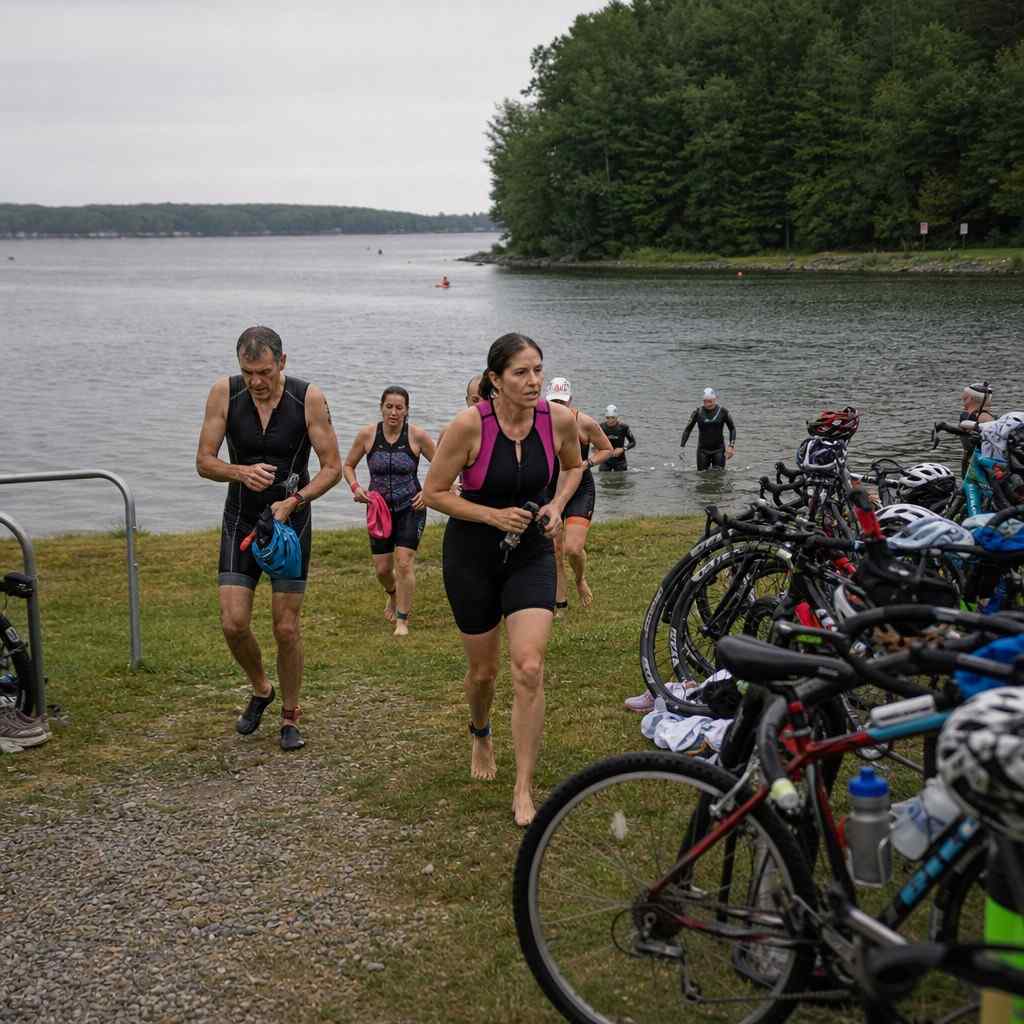
When most people picture a triathlon, they picture the Ironman. A full day of effort, the kind of thing that ends up on television. Forget that image. It has almost nothing to do with where you begin.
A sprint triathlon is the welcoming end of the sport. A typical one looks like this:
- Swim: around 750 meters, often in a pool or a calm, supervised lake
- Bike: around 12 miles on ordinary roads
- Run: around 3.1 miles, the 5K you may already know
Look at that last line again. The run at the end is a parkrun. The event is built for first-timers, and the sprint is where almost everyone sensible begins. If the formats still confuse you, here is what a triathlon is and how the distances compare.
A sprint is not a smaller Ironman. It is a different, friendlier thing.
The three legs, from where you stand
You are not three beginners. You are one runner who needs to add two skills. It helps to look at each leg honestly.
The run: you already own it
This is your leg, and you barely have to change a thing. The endurance base you built as a runner carries straight over, and the 5K at the end of a sprint is familiar ground.
The only new trick is running on tired legs, straight off the bike. It feels strange the first time, like your legs belong to someone else. A few practice runs after a ride, and it stops being a surprise.
If your run base is still young, keep building it the patient way, the same approach that takes a beginner to a comfortable 5K.
The bike: easier than it looks, cheaper than you fear
Cycling is the most forgiving leg for a newcomer. You can coast. You can freewheel down the hills you would have to grind up on foot. Most people are surprised how quickly the miles come.
And you do not need a carbon machine with race wheels.
The four-figure bikes are chasing minutes you are not racing for yet. Get whatever you have running smoothly, make sure it fits, and ride it.
You do not need expensive gear to start. Borrowed and entry-level kit finishes a first sprint perfectly well.
The swim: the part that takes real practice
Here is where we are straight with you. For most runners, the swim is the leg that takes actual work.
Running fitness does not transfer to the water the way you would hope. Swimming rewards technique over raw engine, so being fit does not make you efficient.
A sprint swim is short, though, and you have the weeks to learn it.
Start in a pool. Get comfortable covering the distance at any pace, even with rests. Finishing the swim relaxed beats swimming it fast and panicked. One pair of goggles that actually fit your face is the only thing you truly need to buy to begin, and you can compare beginner swim goggles on Amazon for a few dollars.
Open water is its own step, and it earns real respect.
Open water is not a pool. Cold, depth, and the missing black line to follow make it a different experience. Practice it somewhere safe and supervised, never alone, and build up slowly. A wetsuit helps you float and stay warm, but it is not a safety device. Learn the open water with people who know it before race day.
The fourth discipline nobody warns you about
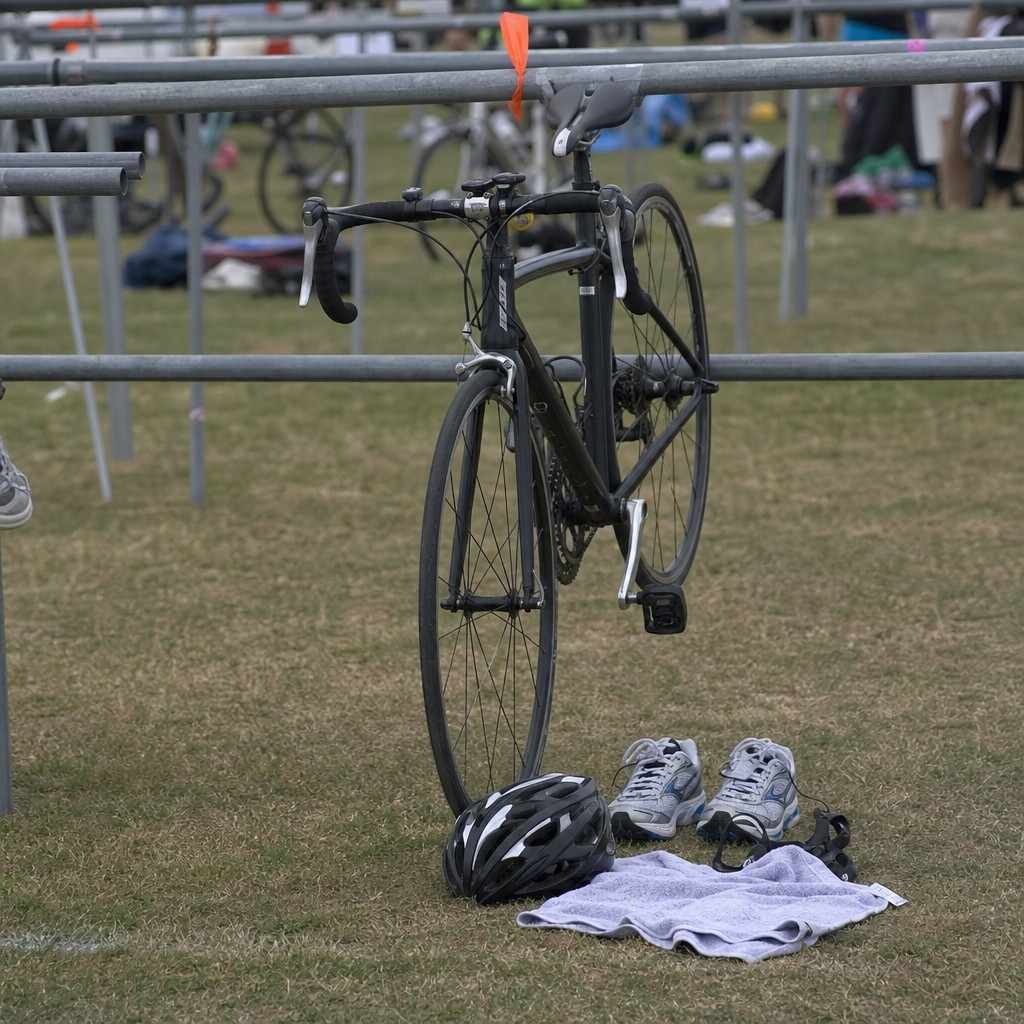
Between the legs are the transitions, and they count as part of your time. The swim-to-bike change is T1. The bike-to-run change is T2.
The first time, a transition feels like chaos. Wetsuit stuck on one ankle, helmet on backwards, no idea where your bike is racked.
The third time, it feels obvious.
Transitions are just changing your gear with a clock running. Lay your kit out in the order you will need it, practice once in your driveway, and you have already beaten half the first-timers who never bothered.
What it actually takes
For a runner who can already cover a 5K, a first sprint is usually eight to twelve weeks of preparation, training three to five times a week. Most of that time goes into the swim and a few rides.
You are not rebuilding your fitness. You are bolting two new skills onto the fitness you already have.
The cost can stay small. Pool entry, a swimsuit, goggles, a bike you can borrow or already own, and the race fee. The sport will happily sell you carbon and neoprene later, and none of it stands between you and a finish line now.
If you have a health condition or have been away from exercise for a long time, have a word with your doctor before you start. This is general guidance, not medical advice.
How to start, this month
You do not need a perfect plan. You need a first step. Here is a simple one:
- Pick a sprint race about ten to twelve weeks out, and sign up. A date on the calendar is the best coach there is.
- Get in the pool once this week. Swim what you can, rest when you need to, and just get used to the water.
- Sort out a bike. Borrow, dust off, or tune up whatever you can find, and take it for one easy ride.
- Keep running, but add one short run straight after a ride so your legs learn the handoff.
- Do one supervised open-water swim before race day, so the lake is not a surprise.
That is the whole on-ramp. None of it is heroic. All of it is doable on the fitness you already built as a runner.
A first triathlon is not a test you pass or fail. The goal is to finish it and enjoy it, then decide whether you want a second. Most runners who try one are surprised by the same thing on the far side of the line. They could do it all along.