

Your first pair of running shoes represents the foundation of every mile you’ll conquer, every goal you’ll chase, and every finish line that awaits.
But here’s what nobody tells beginners: you don’t need half the gear cluttering your cart right now.
You’ll waste money on unnecessary gadgets while potentially skimping on the essentials that actually prevent injury and keep you motivated. The difference between quitting after two weeks and building a sustainable habit often comes down to just three critical purchases, and knowing exactly what to skip.
What Beginner Runners Should Buy First (and What to Skip)?
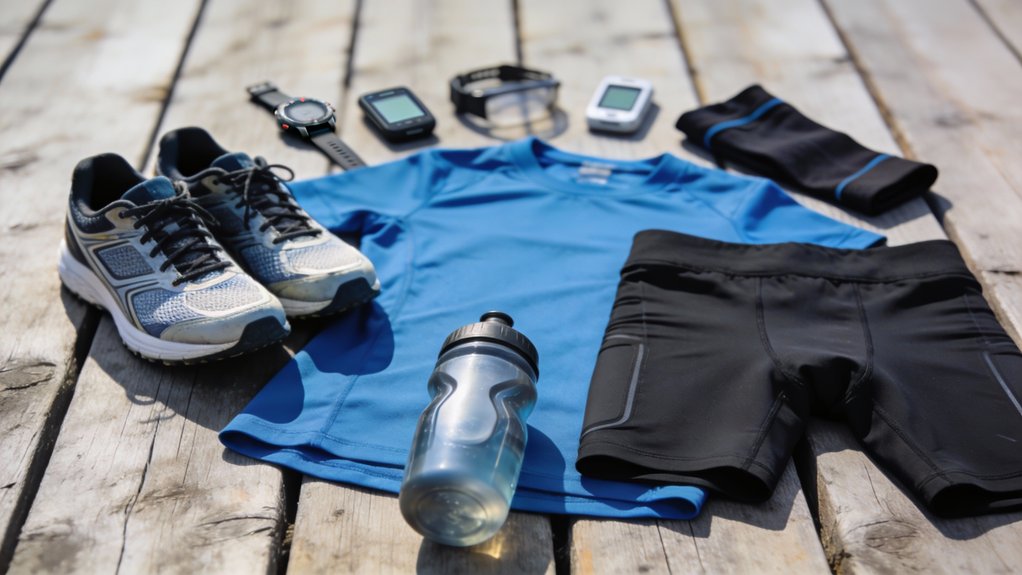
When you’re starting out as a runner, the sheer volume of available gear can feel overwhelming. Focus on what matters: a solid pair of shoes first.
Running shoe brands like Brooks offer models such as the Ghost 16 that deliver proper support and cushioning to keep injuries at bay. Make sure to get a gait analysis at a running store to determine whether you need neutral or stability shoes based on your pronation pattern.
Next, grab moisture-wicking shirts. The Rabbit EZ tee for men or lululemon’s Swiftly Tech for women work well.
Add quality socks like Feetures Elite tabs and a simple hydration system for longer efforts.
Skip fancy GPS watches initially. These essential running accessories give you freedom to focus on the actual running.
How to Choose Your First Pair of Running Shoes?
Your first pair of running shoes deserves more thought than grabbing whatever’s on sale at the department store.
Visit a specialty running store for proper shoe fitting: professionals there will analyze your running gait and match you with the right type.
A professional gait analysis at a specialty running store ensures you get shoes that actually match your biomechanics.
High arches need cushioned shoes, while overpronators require motion control. Look for good shock absorption to prevent injuries.
Leave a thumb’s width between your longest toe and the shoe’s end for natural foot movement.
Plan to replace them every 450-600 miles, because worn-out shoes compromise support and increase injury risk.
Understanding your pronation type helps ensure you select shoes that provide proper support for your running style.
Your feet will thank you.
Why Beginners Should Invest in Moisture-Wicking Clothes?
Cotton might seem like a harmless choice for running clothes, but it’ll sabotage your workout within the first mile. It traps sweat against your skin, causing chafing and discomfort that’ll cut your run short.
Moisture-wicking fabrics, polyester, nylon, and wool, pull sweat away from your body and dry quickly. This means you’ll stay comfortable for longer distances without the distraction of soggy, heavy clothing.
The moisture benefits extend beyond comfort: you’ll avoid blisters and skin irritation that sideline new runners.
These fabric types regulate your body temperature during intense workouts, giving you the freedom to focus on building your endurance instead of fighting discomfort.
Which Socks and Underwear Actually Prevent Blisters?
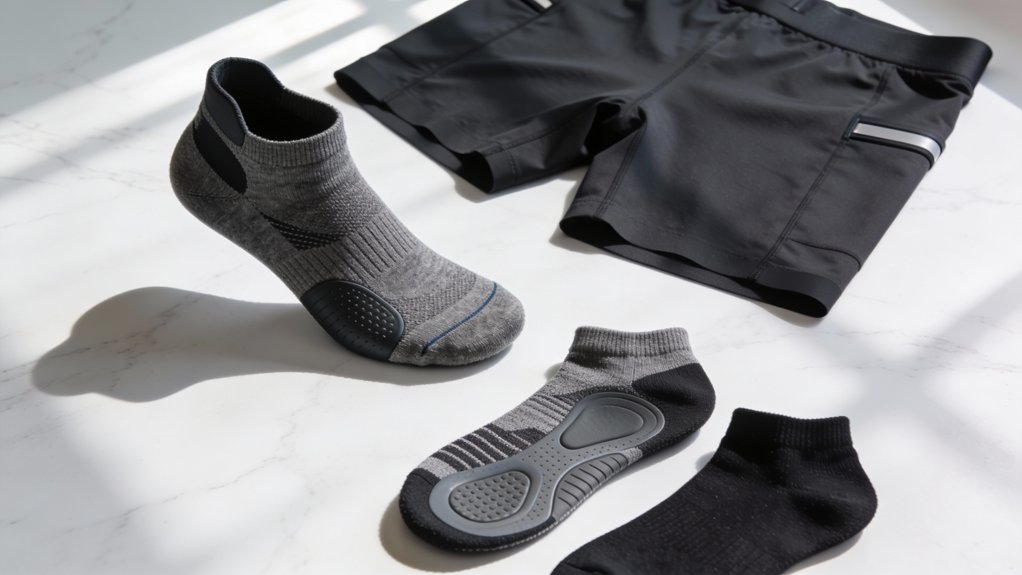
The right fabric choices matter even more when it comes to socks and underwear: these items sit closest to your skin where friction does the most damage.
Proper sock materials and blister prevention strategies start with understanding what works:
- Synthetic or merino wool socks actively pull moisture away from your feet, keeping them dry throughout your run.
- Anatomically designed pairs hug your foot’s natural shape, providing compression where you need it most.
- Seamless construction eliminates irritating ridges that rub against your skin during repetitive motion.
- Snug-fitting running underwear stays in place without bunching or creating friction points.
Choose gear that fits properly without excess material.
Do Early Morning Runners Need Reflective Gear?
When you head out before sunrise, drivers simply can’t see you in their regular line of sight, and that’s a problem you need to solve with reflective gear.
The reflective benefits are straightforward: these materials bounce light back to its source, increasing your safety visibility by up to 200%. A simple vest or arm band makes you noticeable from several hundred feet away.
You’re not sacrificing comfort or speed—just adding a lightweight layer that keeps you visible.
Dawn running doesn’t mean giving up your routine. It means running smart with gear that lets drivers actually see you coming.
The 3 Accessories Beginners Can Skip Completely
While reflective gear protects you during early runs, you’ll face plenty of marketing pressure to buy accessories you don’t actually need.
These running accessories often drain your wallet without improving your experience. Focus on beginner essentials that matter:
- Specialized running headphones: Simple $10 wired earbuds deliver adequate sound without battery anxiety.
- Expensive hydration packs: A handheld water bottle handles short runs under 90 minutes.
- High-tech running watches: Your smartphone’s GPS app tracks distance and pace effectively.
- Compression gear: Optional for newcomers who value comfort over performance claims.
You’ll save money and avoid unnecessary complexity during your early training months.
GPS Watches and Hydration Packs: When Beginners Need Them?
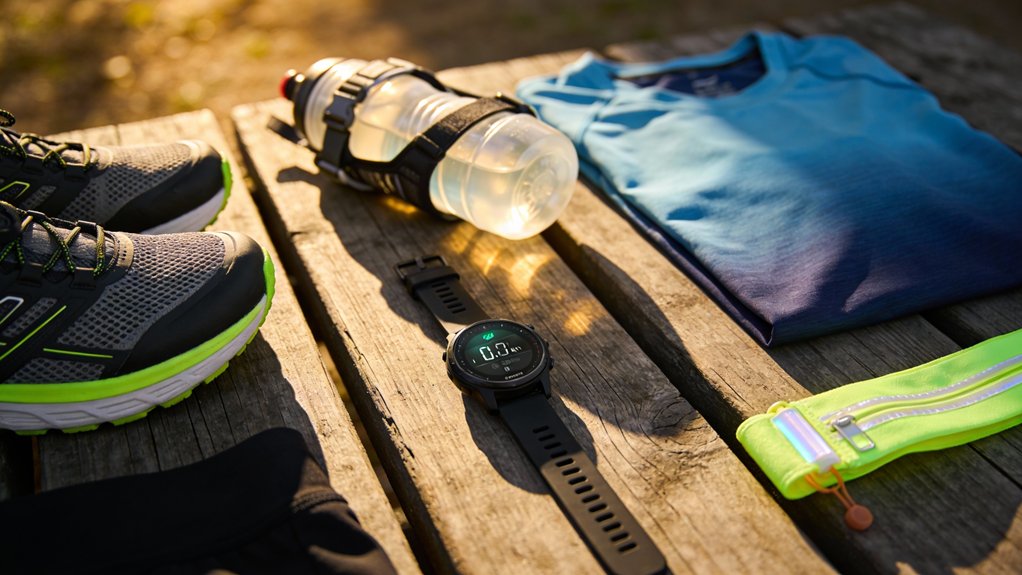
After three months of consistent running, your training needs start shifting in predictable ways. GPS benefits become clear when you’re tracking weekly mileage and monitoring pace improvements.
A GPS watch provides instant feedback during runs and helps set realistic goals based on actual data.
For hydration strategies, consider your run duration. Shorter runs under 45 minutes need minimal water. Beyond that, a hydration pack becomes valuable for carrying fluids and nutrition.
Choose one that’s comfortable and stays under 20% of your body weight. These tools support your independence, letting you run farther without frequent stops.