

Race morning arrives earlier than you expect.
You are in a parking lot before sunrise, bike in hand, trying to remember which way the transition area is. The nervous energy around you is real, and everyone else looks like they know exactly what they are doing.
They do not. Most of them are first-timers too.
A sprint triathlon is designed for people who have never done one. The distances are short, the atmosphere is welcoming, and the only person timing your performance is you. Here is the full picture of what that morning actually looks like.
What you are actually signing up for
Before race morning, the distances help. A typical sprint triathlon runs:
- Swim: around 750 meters (roughly 30 lengths of a 25-meter pool)
- Bike: around 12 miles on regular roads
- Run: around 3.1 miles, a 5K
That run at the end is the distance you already know. If you are still unsure how a sprint compares to other formats, here is what triathlon is and how the distances stack up.
Start with a sprint. The short distances are designed for first-timers, not for Ironmen.
Your only real job this morning is to finish, and to enjoy it. Hold that thought for the whole way around.
Race morning: arriving and setting up
Plan to arrive at least 90 minutes before your wave starts.
Registration and body-marking happen near the entrance. A volunteer will write your race number on your arms and legs in marker. It feels odd the first time. It is just a quick lookup system for the finish-line crew.
Then you head to transition.
Transition is the area where you leave your bike, helmet, shoes, and anything else you need between legs. Each competitor gets a small strip of rack space, usually assigned by number. Take your bike, hang it by the saddle or nose depending on the setup, and lay your gear out on the ground.
A simple layout makes T1 and T2 much easier:
- Helmet on top of everything, buckle up, facing you
- Cycling shoes or running shoes next to the bike
- Race bib and anything you need for the run within reach
- Sunglasses, nutrition, and extras tucked in or under your helmet
Walk the route from the swim exit to your bike, and from your bike to the run start. Do it once before the race. The path through transition feels obvious at a slow walk and genuinely confusing when you are wet and breathing hard.
The swim start: calmer than it looks
For pool swims, you line up by estimated time for 100 meters and go off in intervals. No crowding, no chaos.
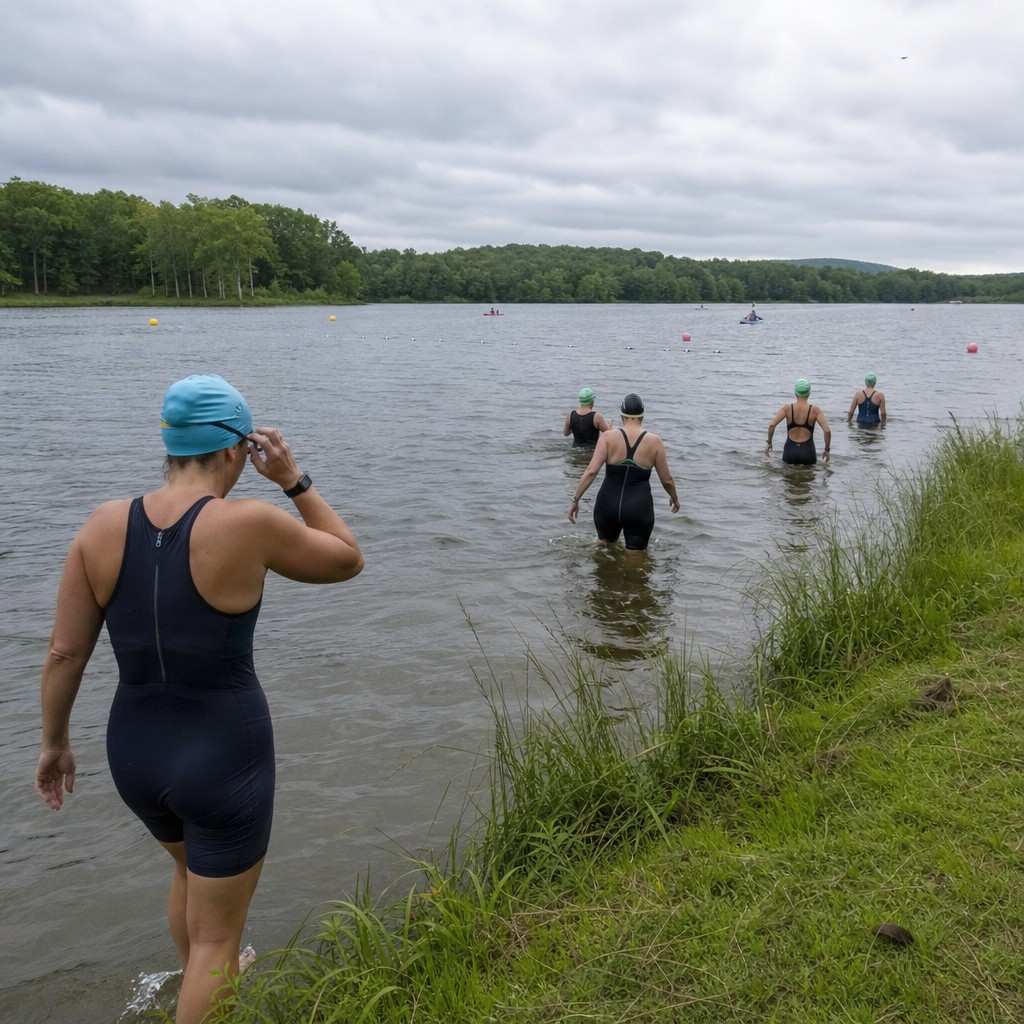
Open-water starts are different. Swimmers go in waves, usually grouped by age or estimated finish time.
Seed yourself at the back of your wave. The front row is competitive. The back is relaxed. Nobody is judging your pace, and hanging back means more space from the first stroke.
The goal of a first triathlon is to finish and enjoy it, not to chase a time.
The swim will feel different from the pool. The water may be cold, there is no line to follow on the bottom, and other people are kicking nearby. This is normal. If you need to pause, roll onto your back, float, and breathe. You are allowed to take a breather at a kayak or a buoy. It is not a disqualification; it is racing at your own pace.
One safety note: open water is not a pool. Always practice it somewhere safe and supervised before race day, never alone, and never treat a wetsuit as a lifesaving device. It helps you float and stay warm; it is not a substitute for knowing the conditions.
T1: bike-to-run, wet and moving
You come out of the water, run to the transition mat, and now things feel hectic.
They always feel hectic the first time.
Transitions are just changing your gear with a clock running. Helmet on and buckled before you touch the bike, this is the non-negotiable rule. Shoes on or in pedals, rack cleared, then you walk your bike to the mount line and start pedaling.
There is a mount line marked on the ground. You cannot get on the bike before it.
That is the whole of T1. It takes longer in imagination than in practice.
The bike leg: easier than expected
For most first-timers, the bike is the pleasant surprise.
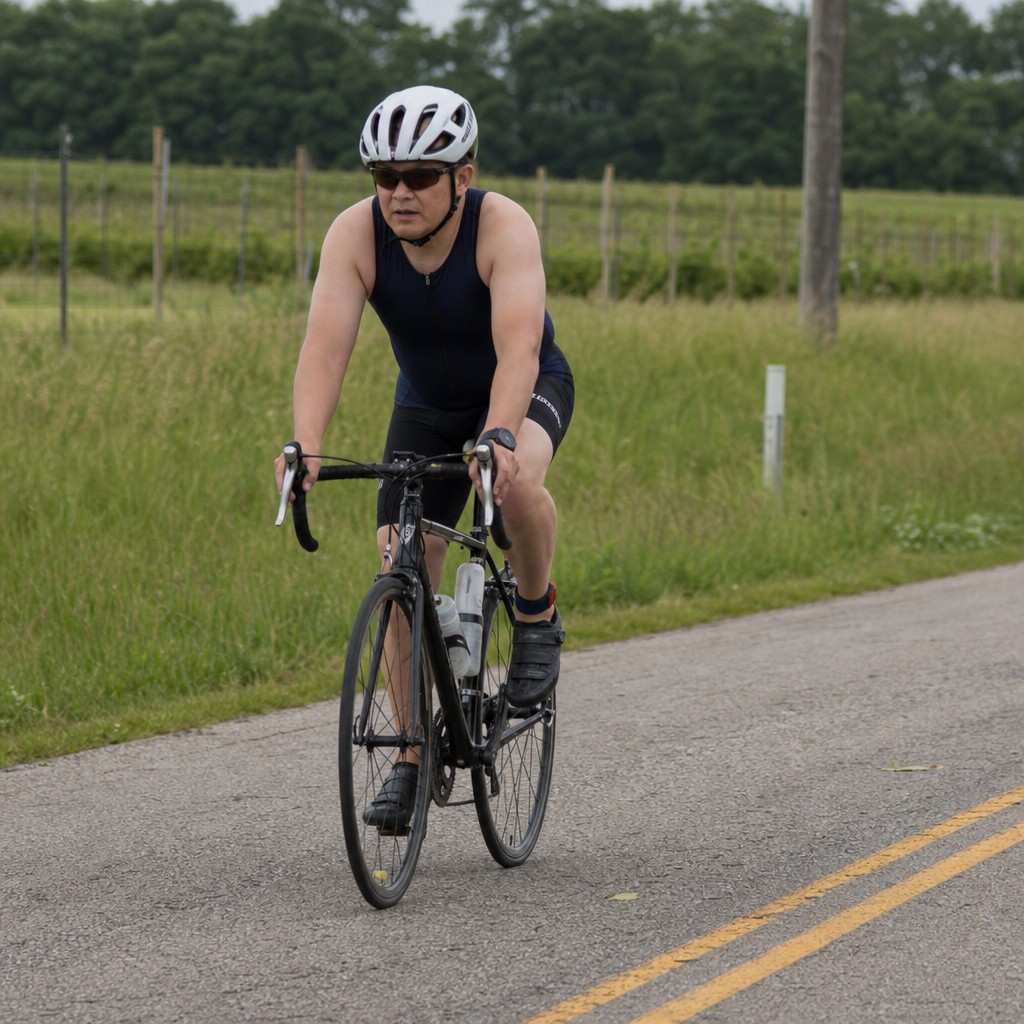
You can coast. You can sit up when a hill hurts. The miles come faster than on foot, and most sprint courses keep the climbing reasonable.
A borrowed road bike, a hybrid, or whatever you can put in reasonable shape gets you through a first sprint.
You are not racing your bike. You are riding it to the run.
Keep a pace you can hold a conversation through, or close to it. Coming off the bike with legs full of lactic acid makes the run harder than it needs to be.
USA Triathlon’s beginner guidance notes that first-timers who go too hard on the bike are almost always the ones who struggle to run off it. Steady is the strategy.
T2: bike to run
T2 is faster than T1. Rack the bike, swap to running shoes, grab your bib if it is not already on.
A race belt makes the bib swap take about four seconds instead of fumbling with pins while breathing hard. If that sounds useful, you can compare triathlon race belts on Amazon before race day. It is one of the few things worth buying early.
Leave the area at a jog. Legs feel strange off the bike, a little rubbery, like they belong to someone else for the first 200 meters. That passes.
The run: familiar ground at last
This is your leg. You have done this distance before.
The run at the end of a sprint is 5K. You may be tired. Your legs may feel unusual for the first few minutes. But if you have made the jump from running to your first sprint, your aerobic base is here.
Runners have a head start: running is the discipline most beginners fear least, and the natural on-ramp to triathlon.
Run easy in the first kilometer. Let the legs settle. After that, run whatever pace feels honest.
The finish line is louder than you expect. The crowd cheers for last-place finishers the same way they cheer for fast ones.
The finish, and what it tells you
You cross, someone hands you a medal or a finisher token, and the morning suddenly feels very different from how it felt in the parking lot.
The things that seemed overwhelming turned out to be manageable. Racking the bike correctly, the swim start, remembering T1 in order, none of it was as hard as it looked from the parking lot. It gets easier still the second time.
Finishing a first sprint triathlon is not proof you are a triathlete. It is proof you can do a second one with much less fuss.
That is what most first-timers discover somewhere between T2 and the finish line. The sport looked like it was for other people. It was not.
This is general information, not medical advice. If you have a health condition or have been away from exercise for a long time, check with your doctor before race day.