

Worried the swim will stop you?
It stops more runners in their heads than it ever stops them in the water. A sprint-triathlon swim is around 750 meters. That is about 30 lengths of a standard pool, and you can rest at the wall whenever you want.
The swim is the shortest leg of the race. It is also the one that takes the most learning to get comfortable with, and the gap between those two facts is where most runners get stuck.
Here is the honest version of what it takes.
Why your running fitness does not carry over
You are fit. You run. You figure the swim will be hard but manageable, the way the first few runs were hard but manageable.
It does not quite work that way.
Running is mostly about engine. Build a bigger engine and you go faster. Swimming is mostly about technique. A relaxed swimmer with poor fitness will usually outswim a fit runner who has never learned to breathe properly in the water.
The water punishes tension. The more you fight it, the faster you tire.
This is not bad news, once you understand it. It means the swim is a skill problem, not a fitness problem.
Swimming and cycling are learnable skills, not natural talents. Anyone willing to practice can get race-ready.
You do not need to become a strong swimmer. You need to become a calm one.
Getting started in the pool
Find a quiet lane and get in. That is step one, and it is the only step that actually matters at first.
Most runners who have not swum in years come out of the first session surprised, because the pool does not ask for perfection. It asks for showing up.
A first pool session has one goal: feel comfortable. Not fast. Not efficient. Just comfortable.
Here is a simple way to structure it:
- Swim a length, rest at the wall for as long as you need.
- Swim back. Rest again.
- Repeat for 20 to 30 minutes.
Do not count laps. Do not push pace. Rest when you need to rest.
Open water is a skill of its own. Build your comfort in the pool first, and earn the open water later.
Breathing is where most runners tighten up. The instinct is to hold your breath and turn to gasp. It works in short bursts and falls apart over distance.
The fix is simple, even if it takes a few sessions to feel natural: breathe out steadily while your face is in the water, turn to inhale on one side, breathe out again. The same rhythm that keeps you relaxed on a hard run applies here, and if you have spent time on your running breathing techniques, you already understand the idea of breath matching effort.
The goal is to arrive at the far end of a length still feeling calm. That is the whole skill, stripped down.
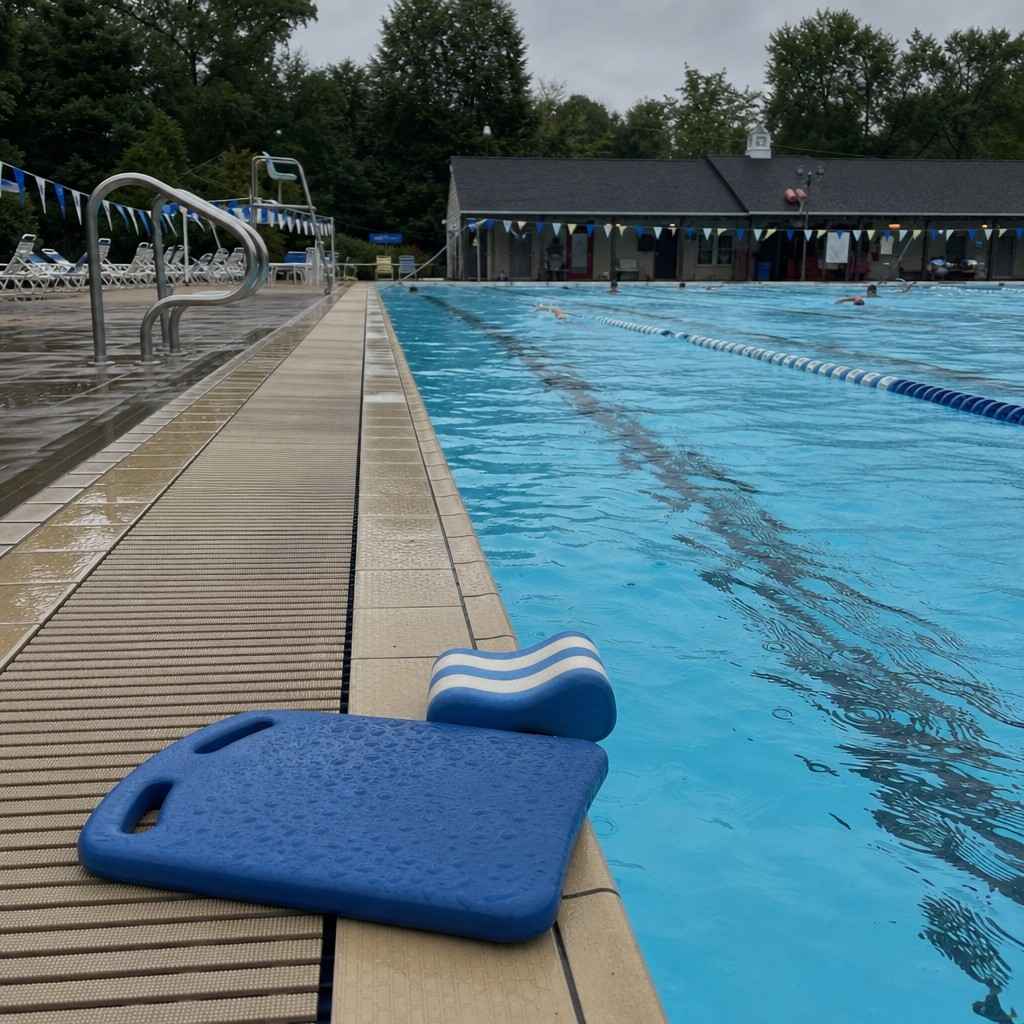
A kickboard or pull buoy can help in the early weeks. A kickboard isolates your legs and helps you feel the water; a pull buoy supports your hips while you focus on your arms and breathing. You can compare basic swim training aids on Amazon for a few dollars if you want one to use regularly.
This is general information, not medical advice. If something in your body does not feel right in the water, check with your doctor before continuing.
Building to 750 meters
The sprint-swim distance sounds far when you picture it all at once. In practice, you build to it piece by piece, and it arrives sooner than you expect.
Add a few lengths each session. Keep resting whenever you need to.
You do not need to swim 750 meters without stopping before race day. Many first-timers swim the sprint distance with a rest or two along the way, and that is completely normal.
The goal is to get comfortable covering the distance at a steady, relaxed pace, not to produce a swim split to brag about.
Three pool sessions a week for four to six weeks is enough for most runners to reach this point, assuming they are already comfortable in the water.
Finishing the swim relaxed is worth more than swimming it fast. Arriving at T1 with your heart still calm means a better bike and a better run. Arriving gasping takes several minutes to recover from.
The move to open water
At some point before race day, you need to get into open water. There is no good way to describe it other than this: it feels completely different.
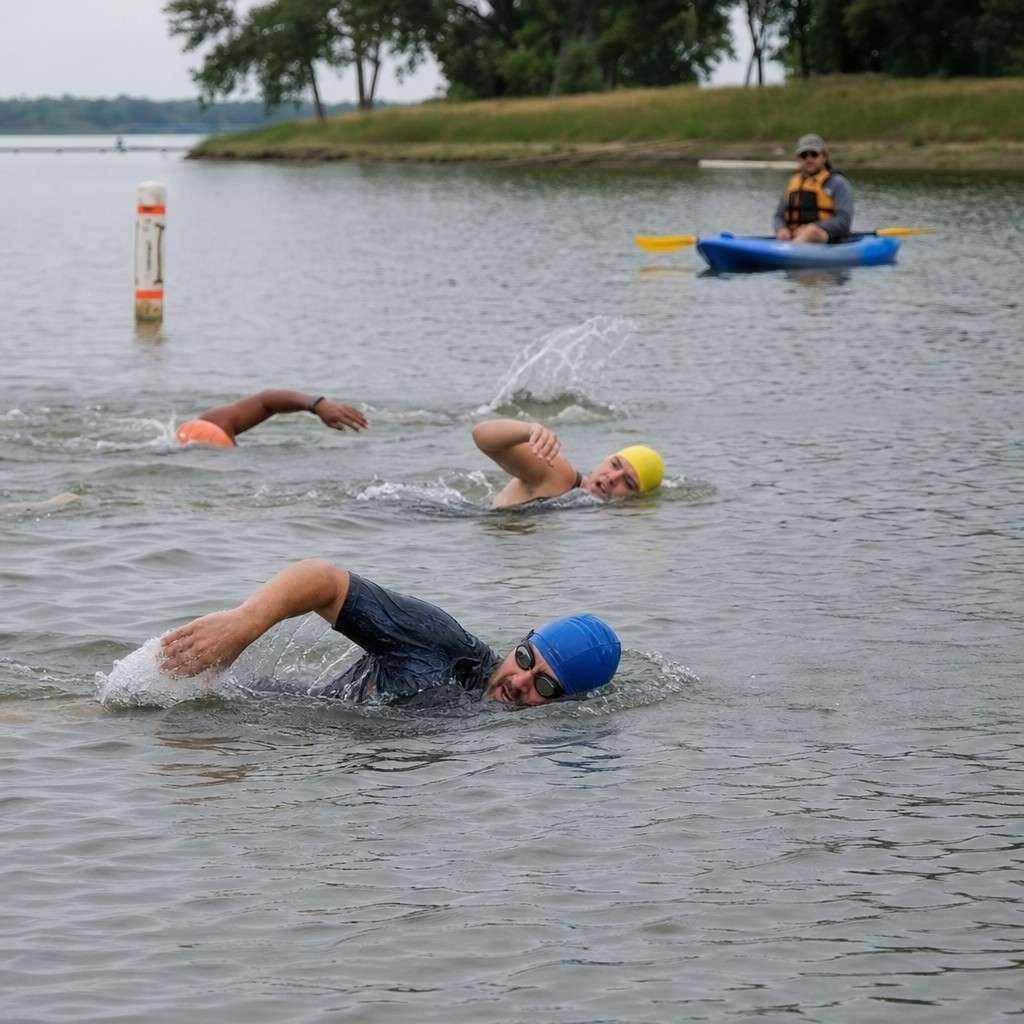
The black line is gone. You have to sight, lifting your head every few strokes to check your direction. The water is cooler, sometimes murky, and it moves. Your wetsuit changes your buoyancy in ways that feel strange at first.
None of that is reason to avoid it. It is reason to practice it before you race.
Open water is not a pool. Always swim somewhere safe and supervised, with a lifeguard or experienced swimmers present. Never swim alone in open water, no matter how confident you feel in the pool. Build up gradually, starting in a calm, sheltered spot. A wetsuit adds buoyancy and warmth, but it does not make you safe on its own. Treat the open water with respect, and it will take care of you.
Most sprint races take place in a calm lake or bay, not in the ocean. Find a local supervised open-water swim session if your area has one. Many triathlon clubs run them through the summer specifically for people training for their first race.
After two or three open-water sessions, the strangeness fades.
Two or three calm, supervised swims are usually enough to make race day feel familiar.
If the swim leg is what’s been holding you back from making the move from running into triathlon, this is the part that improves fastest with targeted practice.
A realistic progression
Here is how the pool-to-open-water move tends to go for a runner starting from scratch:
- Weeks 1 to 2: short pool sessions, resting freely, focusing on breathing and not panicking.
- Weeks 3 to 4: building to 400 to 500 meters per session, still with rests, feeling calmer.
- Weeks 5 to 6: reaching 750 meters with breaks, practicing sighting (lifting your head to look forward, as if you are checking your direction in open water).
- Weeks 7 to 8: first open-water swim in a supervised setting. Shorter distance than the pool, calm conditions.
- Weeks 9 to 10: two or three more open-water sessions. Race day is no longer a mystery.
This is not a coaching program. It is just the rough shape of how most runners get there.
The swim takes real practice
We will be straight with you, the way we try to be about all of it.
The swim takes more deliberate practice than the other legs. Running fitness does not carry over, open water is a new skill, and the early pool sessions can feel discouraging.
They get better. Faster than you expect.
Consistency beats intensity here more than anywhere else. Three short pool sessions a week beat one long, anxious one. Every session builds the water confidence that race day demands.
A 750-meter swim at a calm, steady pace is within reach for any runner willing to practice.
It always has been.
The gap is just practice, and practice is something runners already know how to do.
The goal of your first triathlon is to finish it and enjoy it, not to win the swim. Get to the far end of the water in one piece, run up to T1, and the rest is a sport you already know how to do.